Category: media

  • Newsosaur: Newspapers Consider Printless Days

    No time to write today, but I picked this none-to-delectible tidbit up from Alan D. Mutter at Newsosaur while surfing during lunch and had to share:

    In one of the most startling of the potential initiatives, an amazing number of publishers of all sizes are giving serious consideration to eliminating print editions on certain days of the week, according to private conversations with operators who requested anonymity.

    Monday, Tuesday and Wednesday editions, which typically carry the least amount of advertising, appear to be at the most risk.

    With demand for newspaper advertising this year plummeting in every category (including online since March), industry ad revenues in 2008 are likely to be no better than $38 billion, or nearly 25% less than they were when sales hit an all-time peak of $49.4 billion in 2005.

    An interesting notion, and one I hadn’t trully considered until just now.  I suspect in the end, publishing only a few days a week will be unworkable for most publications due to union contracts, etc.  Additionally, many of the hard costs endemic to print publishing and delivery will remain, ie, the presses, the trucks, etc.  

    The big point to keep in mind is that no one would have ever mentioned such a notion out loud in the hallowed walls of a newspaper even a year ago.  How far we have fallen…

  • PC Magazine To Kill Print Version

    PC Magazine announced last week that their January issue would be the last issue they actually print, from then on, they’re a web-only publication.

    From The New York Times:


    It is the latest of several magazine publishers to drop a print edition, as advertising plummets and the cost of printing a paper version rises.

    “The viability for us to continue to publish in print just isn’t there anymore,” Jason Young, chief executive of Ziff Davis, said in an interview.

    While most magazines make their money mainly from print advertising, PC Magazine derives most of its profit from its Web site. More than 80 percent of the profit and about 70 percent of the revenue come from the digital business, Mr. Young said, and all of the writers and editors have been counted as part of the digital budget for two years.


    There are only two surprises here, first that it took them so long to realize that online was the only viable medium for them, and that they continued to call themselves “news” got so little play to begin with.

    I’ll leave the inevitable “if it’s online only, can you still have ‘magazine’ in the title” snark alone for the day.  The real news here is that some news is best delivered over the web, and Tech News is one of those things.  The long print cycle lead times ensured that by the time the magazine would turn up on your doorstep, the news content would be old and moldy, having been macerated to death by various blogs, news sites and forums.  The key factors for moving Tech News online:


    • Tech readers definitely have computers and high speed access to the web.
    • Tech news cycles move too fast for print.  Web news can be delivered in minutes or hours, while print is right for 3-6 week delivery.
    • Tech news in print demands the most costly of print, high quality glossy magazines.


    In the end, doing tech in print now means deep analysis and rigourous testing (both of which PC Magazine has always excelled at).  Yet, those can be offered online, and with a richer presentation.  Back when I started editing Reel-Time.com I remember new writers would always ask “How many words do I have?” when we talked about their weekly columns.  I always had to laugh, the notion of specific column length being so “print-centric.” On the web, we are free to throw as many pixels as we need at an issue.

    I believe we’re seeing the tip of the iceberg.  Those that can make the jump will start to make that jump quickly.  Notably, I expect to see trade journals become a relatively rare beast.  Ivory towered experts lecturing professionals about their profession is a thing of the past.  Instead, users will gravitate to profession-based niche social media.  The journals will slowly cease to exist, and the magazines that remain will be serving the less technical of the professions.

    For all the talk, er, converstation, going on about Social Media, we really haven’t got there yet.  I think the next year will the telling time, when we see more application of the prime tenets towards the professional space.  Where as we may have proposed a network for surfers last year, which we might monetize someday, this year, we’ll be proposing a network of plumbers, which we’ll be monetizing starting day one.

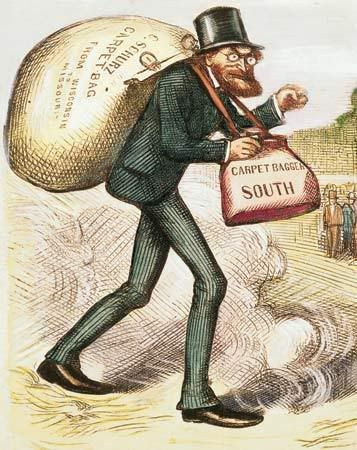
    Once again, we’ve had a “Genie is out of the bottle” moment, and things have again changed for print.  There’s a digital diaspora going on, and we’ve seen a steady wave of carpetbagging print journalists, so it only makes sense that the institutions themselves attempt to make the move.  It’s the publishing equivailent of breaking down the presses and moving them where the money is.

    So, if you’re in print, think about this: how can you better leverage social media online now to allow you to make a transition later?

    And one bit of information to remember: in the 1970s print still used Linotype machines for typesetting.  There were tons of highly skilled linotype operators out there setting type for everyone.  When the first Atex systems came along, they started to put those guys (my grandfather was a life-time linotype operator by the way) out of a job.  About a decade later, the job no longer existed anywhere.  

    Are you a potential digital carpetbagger, or will you go the way of the linotype operator?
  • Newspapers – The Terminal UI Problem

    Perhaps the problem is that the UI stays with you like a bad burrito…

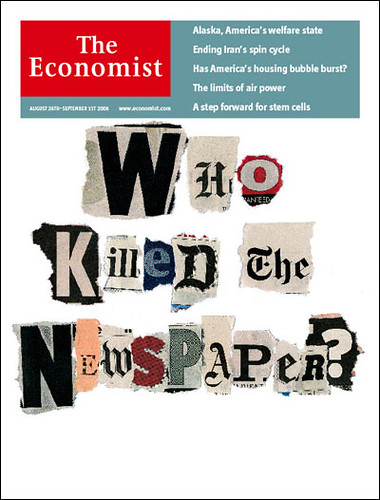
    Yesterday morning I sat at the counter at Puffins Restraurant in Millbury having a wonderful plate of Eggs Latin, and as I struggled to read The Worcester Telegram while eating, I realized the problem with newspapers in print: the User Interface is pathetic.

    Here are just a few of the UI problems:

    • The newsprint is too thin – trying to fold the paper into something you can handle with one hand is virtually impossible.
    • Ink stained fingers – it used to be a sign of a well read person. Now it’s a sign of someone who doesn’t get their information in an efficient manner.
    • Page jumps – In order to read the stuff on the front page, I was forced to dive back into the back page, plus a couple other pages.  On the web, I have a back button.  In print, I have to get all WWE on the thing to bend it to my will.
    • Poor categorization – I’m not necessarily interested in all the news, just the parts I want.  On the web, I can easily have access to most if not all the days news from a single homepage.  Here I have to wade through all the days happenings, for better or worse, because its so…linear.
    • Recyling – I left the paper on the front seat of my wife’s car.  She came in screaming at me that I had to remove my junk and return her car to her the way I left it.  It was as though I’d left a puddle of toxic waste there.  The problem here is that the delivery mechanism is obsolete for anything other then lining the cat litter box the minute your done reading it.

    I’m pretty much done with newspapers and newspaper technology, at least for a while.  I grow tired of chronicling the demise of an industry and instead choose to look forward.  ‘Tis a sad day when a boy whose dreams were of newsrooms, deadlines and worldly old copy editors walks away in disgust.

    As my grandfather watched the death of his trade (he was a linotype operatator), I watch the entire industry crumble.  But fear not, in time it will be reinvented…

  • Kiss a Pig

    Sometimes you really need to kiss a pig, and yes, that indeed, is me...on the right

    Sometimes you really need to kiss a pig, and yes, that indeed, is me…on the right


    Yes, sometimes it’s in our best interest to do something we don’t really want to do, to literally kiss the pig.  Nothing could better typify this than the great ad debate, that age old fight that occurs in media wherein the editorial staff seeks to maintain their supposed journalistic credibility by running a publication that is utterly advertising free, while the ad staff is running around trying to turn your hallowed publication into The Want Advertiser.

    When I worked in print, the editorial staff barely deigned to acknowledge the existentence of the advertising (in fact, most editorial content management systems in print media do not show the ads, only the blocked out holes where ads will go) while the advertising team referred derisively to the actual content of the paper as the “News Hole” (making the purveryors of such “newsholes”).

    In some ways, things have been worse for online media, especially niche media.  Online, many of us were able to build out our sites without the benefit of advertising, channeling the Field of Dreams mantra “build it and they will come.”

    Unfortunately, many of us found that we were simply too small to attract the advertisers we wanted.  We found the endemic advertisers with in our niches were generally too small to foot the bill for what we wanted.  In the end, many of us found we either had to sell or buy, that owning a single site wasn’t enough.

    In the past few days I’ve seen a miraculous transformation on Reel-time, the site that I started with.  The site finally hit the radar of the NameMedia sales team, and all of a sudden, I’m finding there’s a lot of interest in what turns out to be a huge reservior of potential page views.

    The funny thing is that they’re now talking with people who would never have returned a phone call from Reel-Time a year ago.  If we’d even bothered to make the call.

    So, in the long run I’ve learned the big secret of publishing: you’ve got to love advertising, and in particular your ad sales guys.

  • Orange County Register Lays Off 110, “Not Just Profitablity”

    Editor and Publisher is reporting that the Orange County Register is laying off 110 by Friday.  We should remember that their parent company a few months ago launched a pilot program to outsource some editing to India, in addition to also sending some pages for pagination overseas as well.  A flat world indeed!

    OCR Publisher Terry Horne:

    “This isn’t necessarily just to improve profitability, we have to become a different kind of company,” Horne said. “We will be more focused on Interactive and make more of an effort in the print business.”

    Apparently online revenue (excluding employment) is up 69.3% over last year, which would seem to be good news.  The problem is they’ve lost 15% circulation in year on year stats from Sept. 30th.   On top of that, this is the 4th round of layoffs this year alone, which from personal experience I can tell you creates a bunker mentality, and absolutely kills any esprit de corps the organization had left.

    It really seems like their flailing around here.  After all, whenever we hear “Doing more with less”, which is just what they are saying when they cut people to “make more of an effort in print”, we’ve got to snicker.  Easy words to say, much harder to do, especially if you’re the guy who’s just been asked to do more with less people.

  • Monitor shifts from print to Web-based strategy

    Monitor shifts from print to Web-based strategy.

    Wow – read the post before this first.  Then read this.  Here’s where we’re going, folks.  This is earth shattering.

    The Christian Science Monitor plans major changes in April 2009 that are expected to make it the first newspaper with a national audience to shift from a daily print format to an online publication that is updated continuously each day.

    The changes at the Monitor will include enhancing the content on CSMonitor.com, starting weekly print and daily e-mail editions, and discontinuing the current daily print format.

    No more daily print for the Monitor – now that is certainly a transitive moment.

    Update: 10/29 Alan Mutter at Relections of a Newsosaur had this:

    The Monitor also is under pressure to trim by two-thirds the $12 million annual subsidy it now receives from its patron, the First Church of Christ, Scientist, in Boston. 

    So, abandoning print is a good call for the Monitor, which intends to put the bulk of its resources in the future into an upgraded website and a slick, weekly magazine.

    But a paperless strategy likely would not succeed at most general-circulation newspapers, which have no charitable endowments and draw the better part of 90% of their revenues from advertising in the print product. 

  • New York Times To Staff: Relax, We’re Not Firing You Yet

    New York Times To Staff: Relax, We’re Not Firing You Yet

    Wow – even with out the Silicon Valley Insider’s snark, this is a wild and wooly bit to go out to the troops from the NYT Editor, Bill Keller.  The cattle must have been close to stampede…

    Check out the Insiders conclusion:

    But we have a problem with Bill’s characterization of the cuts around the industry as “short-sighted.” Bill’s business reporters would never characterize them that way, and if he wants to maintain his credibility, he shouldn’t, either.

    The newspaper industry is cutting costs because it is in a permanent decline. So far, the online business model cannot support anything like the staff that classifieds and other print ads used to allow. This is a business reality, one that the New York Times has stubbornly refused to accept. The sooner it does so, the better.

    Darn straight – the newspaper industry is in an utterly transitive moment, and the Times is no exception.  They know they’ve got to move to a place where they’re content providers, not content distributors, and that’s gonna be a painful process.

    The problem with this transition is clear: they’re set up to deliver print.  Print is utterly expensive to produce and distribute.  Now all that expense is hanging about their necks like an albatross.

    Even a year ago, while we may have discussed the decline of newspapers, who would have thought a discussion such as this was even possible at the Grey Lady.

  • Media Ethics and Political Affiliations

    Watching the Twitter streams of the newly minted gurus of Social Media, I’m often surprised by how little many of the experts actually know about traditional media. In fact, I’m surprised by how many of us actually have bought the “journalistic ethics” and “media bias” lines we see so often.

    One of the giants of the Social Media, who I’m not gonna call out here, the other day expressed dismay that the Boston Globe had made an endorsement of Senator Barack Obama for President.  Actually, I’d say we ought to express dismay, as a long time reader of the Boston Globe, that they hadn’t endorsed him before the  convention, as there was never any doubt as to which direction they’d swing.

    Bruce Carlson covers the issue wonderfully with his podcast “My History Can Beat Up Your Politics” in the episode entitled “Objectivity in the Media (Re-Run)“:

    If the fact that Greeley ran for congress while being an editor seems shocking, it was not so at the time. His rival Raymond was the chairman of the republican national committee and ran Lincoln’s re-eleciton, all while remaining editor of the NY Times. Later in the century both names associated with tabloid journalism -Pulitizer and Hearst would both serve in congress at different times, with Hearst also running for New York governor and new york city mayors, both realizing they had more power in ink than in office as one vote of hundreds.

    The reality here is that we really didn’t see a lot of “journalistic ethics” in the pre-Watergate era.  Prior to the Woodward and Bernstein days, the newspapers really walked a line in which they simply didn’t want to be called out by the competition for having published a story that was incorrect.  Editors actually cared about taking the time to get things right.

    In some ways we’re surprised today to think of the New York Times as a mouthpiece for the Democratic party or that perhaps the Washington Times is carrying water for the Republicans. We shouldn’t be, the media has almost always been associated directly with the political parties.

  • Times To Shutter IHT Site – Forbes.com

    Times To Shutter IHT Site – Forbes.com.

    Bad news, indeed.  I loved and regularly used the International Herald Tribune site, especially for the readspeaker implementation that allowed me to download audio versions of their stories for playback on my iPhone or iPod.

    I really liked the international viewpoint. I think without out a separate site, we’re losing an important voice in news.

    From my point of view, this is a huge mistake by the Times.  They say it’s about growing the NYTimes site, not about cost cutting:

    Schiller hopes tying the sites together will increase the Times‘ traffic–and, significantly for an Internet news business, give it more content against which to sell ads. Schiller also says the move will let the paper better capitalize on the roughly 18% to 20% of traffic coming from foreigners by selling more ads for them.

    My experience tells me that amalgamating two sites which have dissimilar voices will create in the long term one single site that is roughly the same size as the predominant site that was merged.  In essence, the traffic from the other site vaporizes.

  • Playstation 3 + PlayOn! = Killer Home Video Setup?

    I’ve had a glimpse into the future of home video and it surprisingly comes from a device I already owned, the Sony Playstation 3 (and it works on the XBox 360 as well, but I haven’t tested).  By downloading and installing a small app to my windows machine, I am now able to access online content from Hulu.com, CBS.com, Youtube.com, ESPN.com and soon, CNN.com and Netflix.

    The software is PlayOn! which is currently available as a 60 day beta trial, and when released is expected to cost $30.00 when it reaches full release.  It’s made by a company called MediaMall who’s got the tantalizing mission statement: “MediaMall Technologies enables Low-Cost & Widely Available Media Services, delivered over Broadband to the Entertainment System, via the PC.”  Now how can you possibly go wrong?

    The software isn’t completely perfect yet, but it still gives me a better picture than I get with my standard, non-HD cable line.  I have occassionaly had some jerky delivery, but I’ve found it I pause for a few minutes, go make some popcorn or something, and come back, whatever I’m watching runs fine.  Navigationally, I find the PS3 controller a bit challenging to use, but my 9 year old daughter is getting around like a pro. (more…)